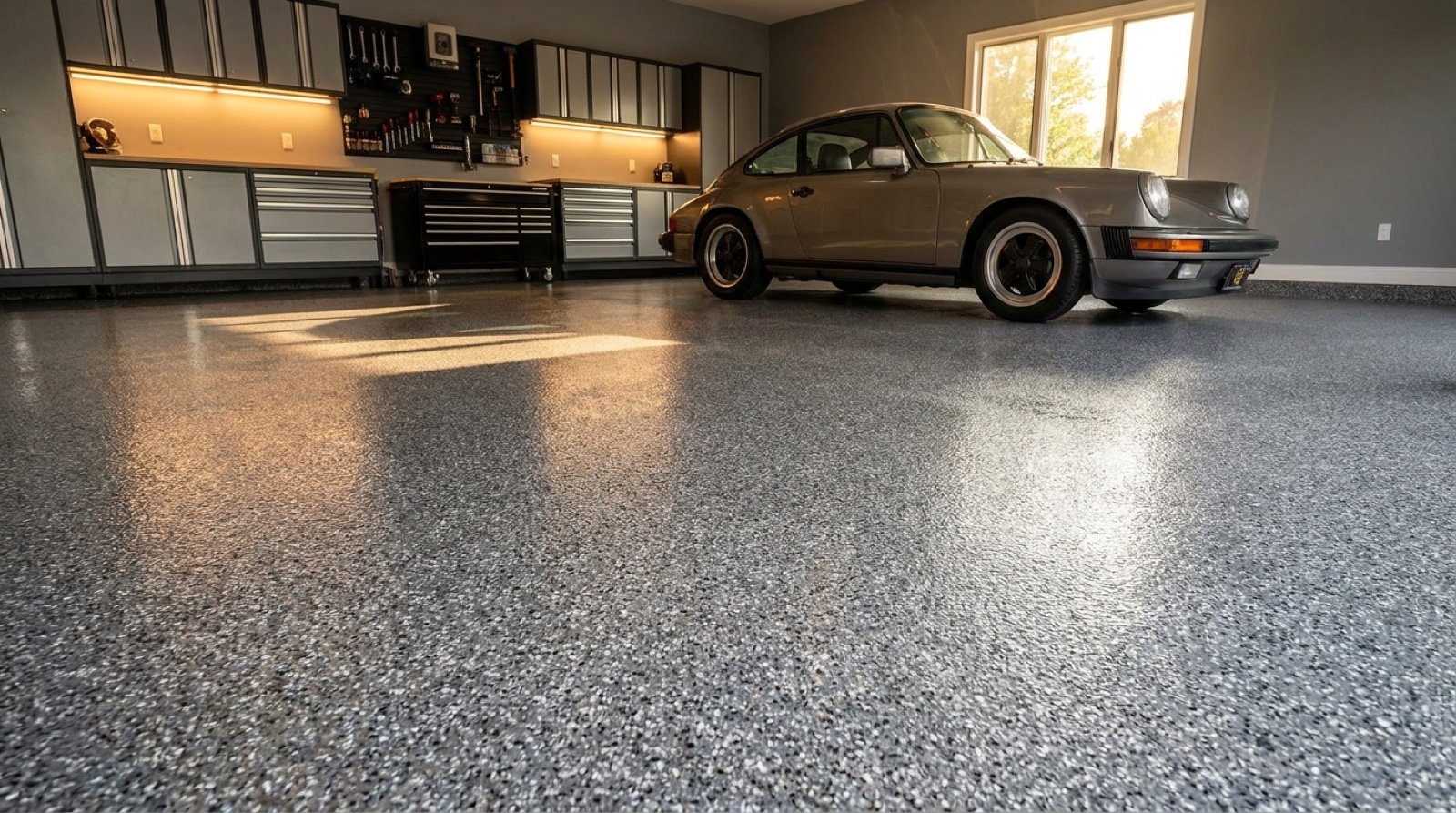
For most homeowners, yes, a professionally installed epoxy or polyaspartic garage floor is worth the money. It stops concrete dust, resists oil and hot tire pickup, and lasts far longer than paint or a roll out mat.
The honest caveats are real though. The prep work is non negotiable, the cost is several times a DIY kit, and a poorly specified floor can be slick when wet.
The Quick Verdict
| Factor | Pro | Con |
|---|---|---|
| Durability | Handles vehicle traffic, dropped tools, chemicals | Thin DIY coatings peel within a year or two |
| Appearance | Wide color and flake options, brightens the space | Shows every flaw in the slab underneath if not repaired |
| Prep | Diamond grinding creates a permanent mechanical bond | Adds labor, dust control and time to the job |
| Cost | Cheaper per year than repainting repeatedly | Higher upfront than a big box kit |
| Safety | Anti slip aggregate can be added to any system | Smooth gloss finishes get slippery wet |
| Repair | Chips and scratches can be patched and recoated | Color matching an aged floor is imperfect |
Pro: It Actually Holds Up
A properly installed system bonds into the concrete rather than sitting on top of it. That is the difference between a floor that lasts a decade and one that flakes off with the first hot tire.
Garages across Orange County see a specific combination of stresses. Cars come home from the 405 with tires hot enough to lift weak coatings, and coastal humidity in places like Huntington Beach and Newport Beach pushes moisture up through slabs.
Polyaspartic handles both better than standard epoxy. It stays flexible through temperature swings and holds its color under UV, which matters when the garage door spends afternoons open. Our polyaspartic coating systems are the usual recommendation for anyone who parks daily.
Pro: It Looks Finished, Not Industrial
Bare concrete stains permanently and reads as unfinished space. A coated floor turns the garage into a room you actually want to use.
You have real choices here:
- Flake and chip blends hide dust, tire marks and minor slab imperfections better than any solid color
- Metallic finishes for showroom style depth, best in low traffic bays or display spaces
- Solid colors for a clean, uniform look at the lowest material cost
Flake is the practical winner for a working garage. The texture also adds grip without any extra additive.
Con: The Prep Is the Whole Job
This is where most failures come from. Coating cannot bond to a sealed, sealed over, or contaminated slab, and acid etching from a kit rarely opens the surface enough.
Proper prep means diamond grinding the concrete to a specified profile, then addressing what the grind exposes. Cracks get routed and filled, spalled areas get patched, and oil saturated spots get degreased or cut out.
Older Orange County homes, especially tract builds from the 1960s and 1970s in Anaheim and Santa Ana, often need concrete repair work before any coating goes down. Skipping that step means the coating telegraphs every defect and fails at the weak spots.
Con: It Costs More Than a Kit
A hardware store epoxy kit runs a couple hundred dollars for a two car garage. A professional install costs considerably more because of grinding equipment, higher solids materials and multiple coats.
The math still favors professional work over time. A kit that peels in eighteen months means paying twice, and removing failed coating costs more than grinding bare concrete.
Compare it against alternatives before deciding. If you want a sealed, low maintenance floor without a coating film, polished concrete is a legitimate option, and stained concrete works for spaces where you want color without a topcoat.
Con: Gloss Floors Get Slippery Wet
A high gloss topcoat with no texture is genuinely slick when water, oil or a rinsed off car puts moisture on it. This is a real drawback and worth planning for.
The fix is straightforward. Aluminum oxide or fine silica aggregate broadcast into the topcoat adds traction with almost no change in appearance, and flake systems already carry texture.
Ask for it specifically if the garage sees wet cars, a laundry hookup or beach gear coming in wet. It costs very little at install and cannot be added later without recoating.
Repair: Better Than Most People Expect
What Is Easy
Surface scratches, small chips and localized damage patch well. A qualified installer can grind the affected area, fill and recoat that section.
What Is Harder
Color matching is the challenge. A five year old floor has faded slightly, so a spot repair may show under direct light.
For an aged floor, recoating the entire bay usually looks better than patching. The good news is that recoating over an intact, well bonded base is far cheaper than a full teardown and reinstall.
Who Should Skip It
Epoxy is not right for everyone. If the slab has active moisture intrusion, an unaddressed vapor problem will delaminate any coating, and that needs testing and a moisture mitigation primer first.
If you are selling in six months, the return is limited. And if the concrete is severely deteriorated, repair or replacement comes before any conversation about coatings.
Making the Call
For a garage you use daily and plan to keep, a professionally installed coating is one of the better value upgrades available. It costs less than a bathroom remodel and changes how the space functions.
The decision usually comes down to system choice and prep scope, and both require looking at your actual slab. See our full breakdown of garage floor coating options, or get in touch for a quote and we will assess the concrete before recommending anything.