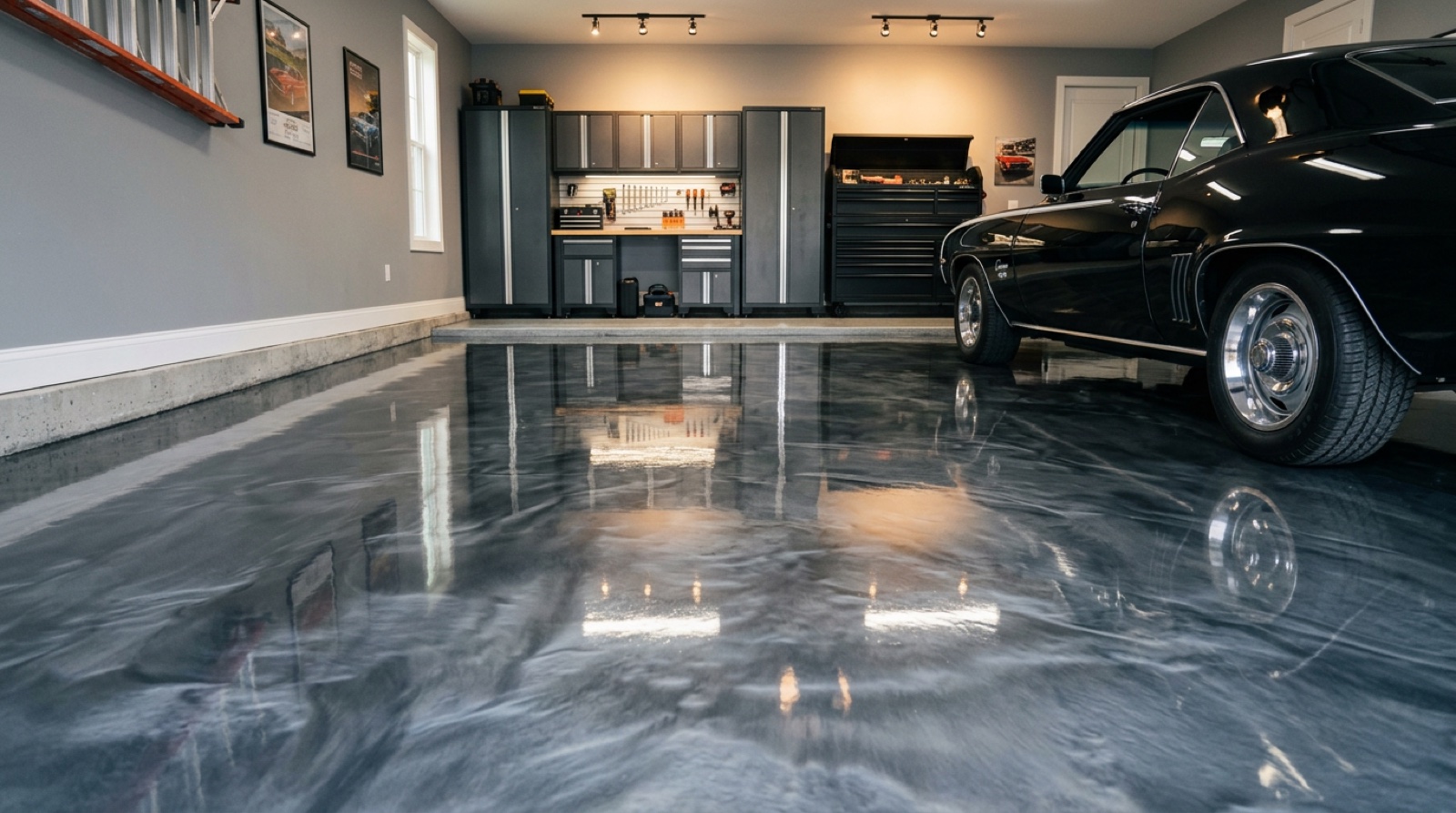
A properly installed epoxy floor in a residential garage lasts 15 to 20 years. Commercial and industrial floors that take heavy traffic usually run 5 to 10 years before they need attention.
Outdoor surfaces fall somewhere in between, depending on sun exposure and the coating chemistry used. The number that matters most is not the product itself. It is how the floor was prepped, coated, and cared for.
Epoxy Lifespan by Setting
Lifespan changes a lot depending on where the floor lives and what rolls across it. Here is a realistic breakdown.
| Setting | Typical Lifespan | Main Stress |
|---|---|---|
| Residential garage | 15 to 20 years | Tire weight, occasional spills |
| Commercial retail or office | 10 to 15 years | Foot traffic, cleaning chemicals |
| Industrial or warehouse | 5 to 10 years | Forklifts, pallet jacks, impact |
| Outdoor patio or driveway | 7 to 12 years | UV, heat, moisture cycling |
These ranges assume the concrete was mechanically prepped and the coating was applied at the correct thickness. Skip either step and you can cut those numbers in half.
Garage Floors Last the Longest
Garage floors get the best lifespan because they live indoors and see predictable loads. Your car is heavy, but the weight sits on soft rubber and stays in the same spots.
A quality garage floor epoxy coating handles years of parking, dropped tools, and the occasional oil leak without breaking down. Most Orange County homeowners get close to two decades out of one before they think about recoating.
If you want extra durability, a flake and chip system adds a textured wear layer that hides scuffs and improves grip. It also masks minor surface flaws over time.
Why Commercial Floors Wear Faster
Commercial and industrial floors do not last as long because the abuse is constant. A warehouse floor might see hundreds of forklift passes a day over the same lanes.
That kind of repetitive point loading grinds through even a thick coating. A well built commercial epoxy floor is designed to be recoated on a schedule rather than replaced.
For the hardest environments, an industrial and warehouse epoxy system uses thicker builds and tougher resins to stretch the timeline. Even so, plan on refreshing high traffic zones every 5 to 8 years.
What Shortens Epoxy Lifespan
Most floors that fail early were doomed at the prep stage. Coating chemistry is rarely the real problem.
These are the factors that pull years off a floor:
- Poor surface prep. Epoxy bonds to a mechanically ground profile, not smooth or dirty concrete. Adhesion failure shows up as peeling within a year or two.
- Moisture from below. Slabs without a vapor barrier push water up through the concrete, which lifts the coating from underneath.
- UV exposure. Standard epoxy yellows and chalks in direct sun, which is why the California climate is hard on outdoor installs.
- Hot tire pickup. Cheap coatings soften under warm tires and peel away when the car pulls out.
- Harsh chemicals. Battery acid, brake fluid, and some degreasers eat into the finish if left to sit.
The sun issue is the big one in Orange County. Long, bright summers along the coast from Newport Beach to Huntington Beach put real stress on any surface that faces the sky.
Outdoor and Polyaspartic Options
Outdoor floors need a coating built to handle UV and temperature swings. This is where product choice actually matters.
Polyaspartic coatings resist yellowing and cure fast, which makes them the right call for anything exposed to sun. A polyaspartic floor coating holds its color and gloss far longer than standard epoxy outdoors.
For a shaded patio or outdoor living area, epoxy can still work well. But a sun baked pool deck or a driveway almost always performs better with a polyaspartic topcoat.
If you are weighing the two systems, our breakdown of polyaspartic versus epoxy covers the tradeoffs in more detail.
How to Make Epoxy Last Longer
Maintenance is simple, and it makes a measurable difference. A floor that gets basic care easily outlives one that gets ignored.
Stick to these habits:
- Sweep or dust mop weekly. Grit acts like sandpaper under tires and feet.
- Wipe spills promptly. Oil, chemicals, and standing water are the main threats to the finish.
- Use a soft cleaner. Warm water with a pH neutral floor cleaner is enough for most jobs.
- Skip the deicing salts and harsh acids. They break down the topcoat over time.
- Add mats under heavy loads. A pad under a motorcycle stand or workbench spreads out point pressure.
Recoating is the other piece. Adding a fresh topcoat every several years, before the wear reaches the base, can push a floor well past its expected life.
When to Recoat or Replace
Watch for dullness, worn traffic paths, or small chips forming. Those are signs the topcoat is wearing thin and a recoat is due.
If you see bubbling, peeling sheets, or coating lifting at the edges, that points to a bond or moisture problem underneath. That usually means a full grind and reinstall rather than a simple refresh.
Not sure which stage your floor is at? Get in touch for a quote and we will assess the surface and tell you honestly whether a recoat or a new system makes sense.
We install and maintain floors across Irvine, Anaheim, Santa Ana, and the surrounding OC communities, so we see how these coatings age in the local climate every day.