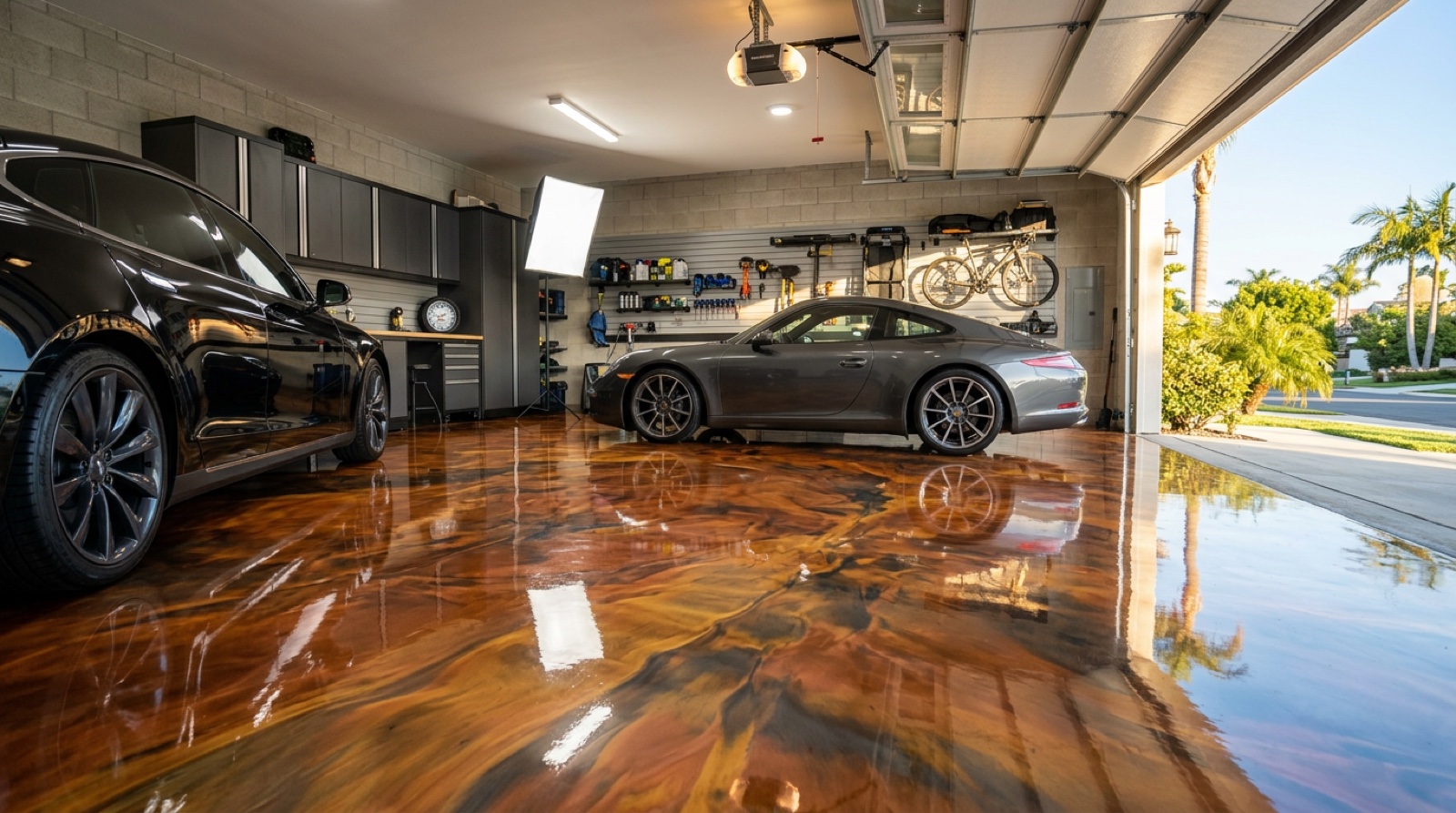
If you're choosing between polyaspartic and epoxy for an Orange County garage, the honest answer is: don't pick one, use both. Here's why every reputable OC contractor specs an epoxy adhesion-promoting base with a polyaspartic UV-stable top coat — and what actually breaks if you skip either layer.
Cure Time
Polyaspartic cures in 1-4 hours per coat at 70°F. Epoxy needs 12-24 hours per coat. For a residential garage that means polyaspartic-only is a true 1-day install (walk in 4 hours, drive in 24); epoxy-only is a 3-day project minimum.
The hybrid system splits the difference: epoxy base goes down on day one, polyaspartic top goes on the next morning, you drive on it that evening. Same 1-day customer-experience as polyaspartic-only, but at a lower material cost.
UV Stability
Pure epoxy yellows under UV. We've watched it happen in 12 months on garage floors with windows facing south or west. The chalking and ambering progresses; by year 3 the floor looks tired. Polyaspartic is UV-stable by chemistry — same molecule used in clear automotive coatings — and stays water-clear for 15+ years in direct sun.
For OC's 280+ sun days a year, UV stability isn't optional. If your garage gets any sunlight, the top coat must be polyaspartic.
Hot-Tire Pickup
This is the most-feared failure mode in any garage coating: a hot tire from a summer drive parks on the floor, the heat softens the resin, and the tire lifts a chunk of coating when you back out the next day.
Pure solvent-borne epoxy and DIY kits fail this test. 100% solids epoxy is better. Polyaspartic top coats don't fail it at all — the same chemistry coats highway bridge decks under interstate truck traffic.
Hardness & Chemical Resistance
Polyaspartic cures roughly 4× harder than standard epoxy on the Shore D durometer scale. It also resists most common garage chemicals — brake fluid, antifreeze, pool chemicals, gasoline — without etching. Epoxy is decent on these but loses some surface gloss after repeated exposure.
Cost
Polyaspartic resin runs roughly 2× the per-gallon cost of 100% solids epoxy. That's why pure-polyaspartic systems quote about 20-30% more than the hybrid (polyaspartic-over-epoxy) system. The hybrid uses cheaper epoxy as the adhesion base where UV doesn't matter, and reserves polyaspartic for the top layer where UV stability and chemical resistance do.
The Hybrid System (What We Actually Install)
Standard residential spec across our 3,500+ OC installs:
- Diamond grind to ICRI CSP 2-3
- Crack and pit repair with polyurea menders
- Pigmented 100% solids epoxy base coat (10-12 mils)
- Vinyl flake broadcast to refusal
- Scrape, vacuum, polyaspartic UV-stable top coat with anti-slip
You get the cost of an epoxy-based system, the cure speed of polyaspartic, and the UV/heat/chemical performance of polyaspartic — without paying full polyaspartic prices.
When to Use Pure Polyaspartic
Outdoor surfaces (pool decks, patios, driveways) require pure polyaspartic top to bottom. Epoxy can't go outdoors in OC because it yellows. Same logic applies to garages with floor-to-ceiling windows or large skylights.
When to Use Pure Epoxy
Honestly, almost never in OC. Maybe a basement-style garage with no UV exposure where you're cost-constrained and willing to accept lower hardness. Even then, the hybrid is usually within $200 and gets you a much better floor.
The Bottom Line
"Polyaspartic vs epoxy" is the wrong question. The right question is "which epoxy hybrid system is right for my floor?" Almost every legitimate OC contractor will steer you to the hybrid; anyone selling you pure epoxy at a premium price is selling you yesterday's chemistry.
Get a Free OC Epoxy Quote
Call (949) 744-6229 or use the form below for a free written quote with mandatory moisture testing and lifetime warranty.